Identifying What Animal Is Living in Your Attic
As winter settles in, everyone wants to be indoors where it’s warm, including pests and wild animals.
If you’re hearing noises or seeing droppings, IPM Pest & Termite near Lexington, Kentucky, can get rid of mice, rats, and other pests before they cause irreparable damage. Other, larger wild animals may necessitate the need for a wildlife control service instead.
Learn what rodent, squirrel, and raccoon poop looks like, some of the noises they make, and what you can try to get rid of them.
Pest Control vs. Wildlife Control: What’s the Difference?
The animal in your attic decides who can safely and legally remove it.
- Pests: Mice and rats are common household pests, most often treated with traps, bait stations, and exclusion, the same way we treat insects.
- Wildlife: Squirrels, raccoons, opossums, and bats are wildlife regulated by the Kentucky Department of Fish & Wildlife Resources. The state sets strict rules on where captured animals can be released
That’s why identifying the animal comes first.
Noises: Squirrels Versus Raccoons Versus Rodents
If you’re hearing noises in the attic during the day, you likely have a squirrel problem. If you hear noises more often at night, then it’s likely raccoons, mice, or rats.
- Squirrel noises: Scratching and rolling as they attempt to bury nuts, pattering footsteps, and chewing or grinding noises as they eat wood. They can also make thudding sounds as they leap from place to place.
- Raccoon noises: A heavy, almost human, tread. Baby raccoons sound like kittens mewing. As they grow, that develops into soft thumps, growls, and snarls.
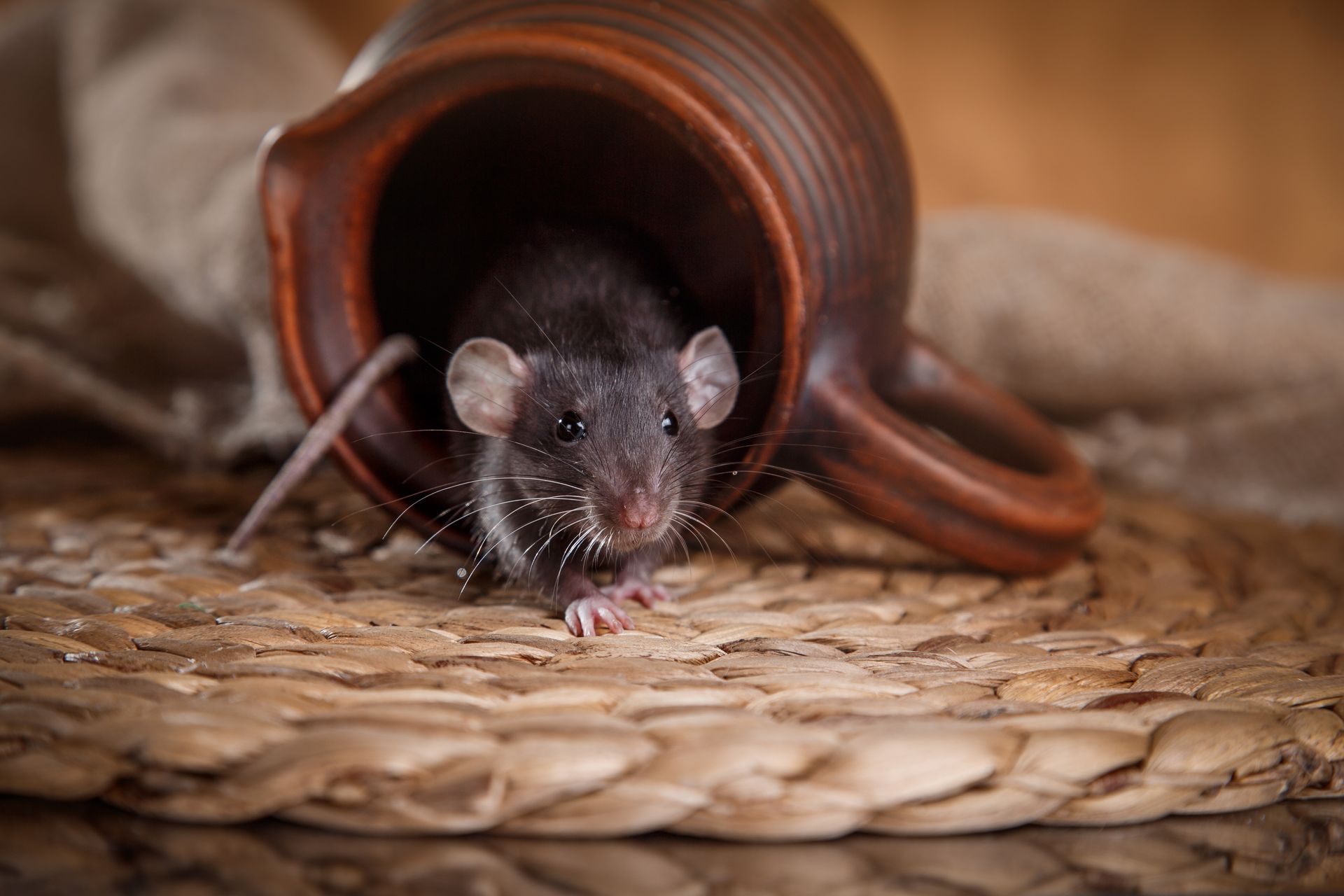
- Mouse and rat noises: Light, quick scurrying and scratching, mostly at night, often inside walls and ceilings as well as the attic. Rats are louder and heavier than mice, and you may hear them gnawing.
Squirrel, Raccoon, and Rodent Poop
Learning what raccoon and squirrel poop look like can help you distinguish what you’re dealing with. Rodent and animal droppings can spread disease, so don’t sweep or vacuum them. Wear a N95 respirator, spray them with disinfectant, let it soak in, and then wipe them up with paper towels so you don’t stir up dust.
What Does Raccoon Poop Look Like?
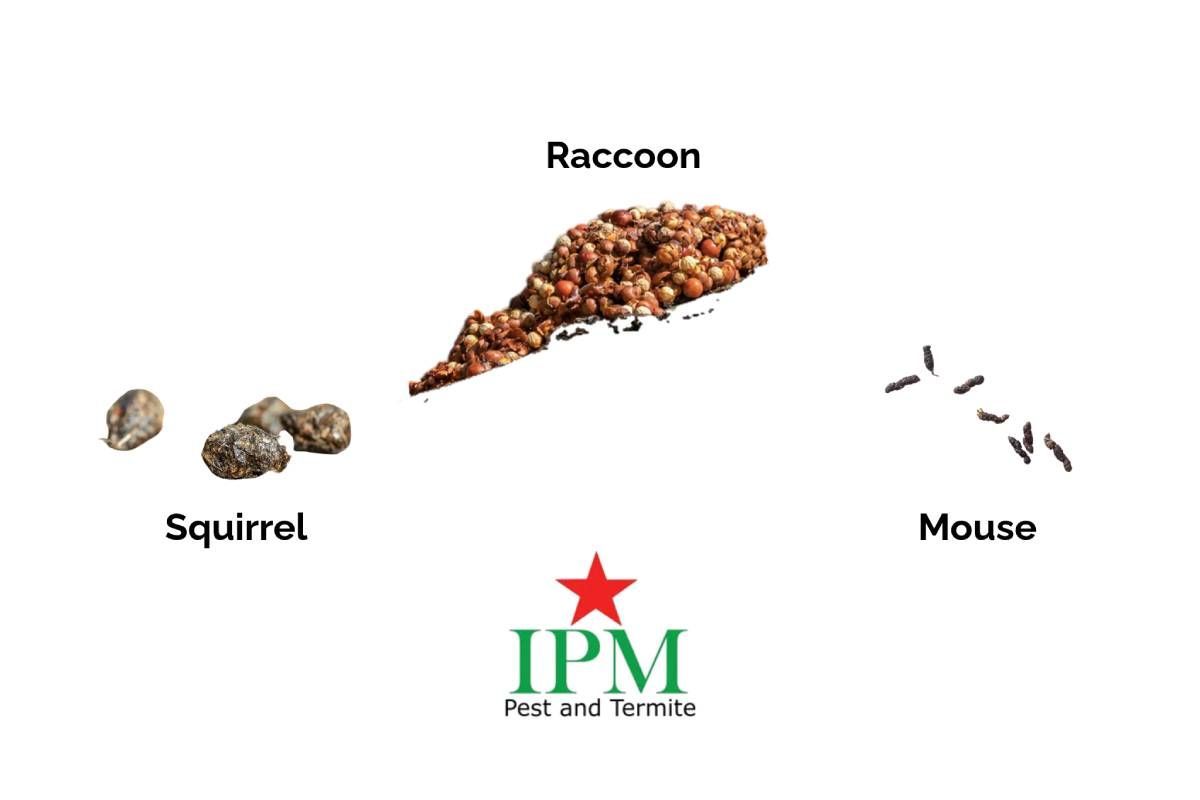
Raccoon poop is about 2-3 inches long and tubular, like dog poop. However, you can distinguish it because it contains undigested bits of food, including berries, seeds, pet food, and pieces of bone. Usually, raccoons designate a specific location for their waste and leave a pile of it.
What Does Squirrel Poop Look Like?
Squirrel poop is pellet-like. The pellets are barrel shaped with rounded ends, about ⅜ inch long or a little longer, and thicker than mouse droppings. They range from light to dark brown, but can turn black. Squirrels scatter their scat randomly.
What Do Mouse and Rat Droppings Look Like?
Mouse droppings are about the size of a grain of rice, under ¼ inch, with pointed ends, and they’re scattered wherever mice travel. Rat droppings are larger, about ½ to ¾ inch, and are often concentrated in one area. Both are dark when fresh and fade as they dry. Learn more about how to tell rats and mice apart.
How Do I Get Rid of Mice and Rats in the Attic?
That’s where we come in. IPM Pest & Termite will inspect your home for entry points, place mitigation where they’ll work best, and seal the gaps rodents use to get in. Mice can fit through openings about the size of a dime, so sealing is what keeps them from coming back. Learn more about how mice get into your house and our rodent control services.
How Do I Get Rid of Squirrels (or Raccoons) in the Attic?
Because squirrels and raccoons are wildlife, the safest route is a wildlife control operator with a permit to trap and remove them.
If you’d rather handle it yourself, there are a few things you can try. Make sure there are no babies. They will die and the mama will try to destroy your roof to get to them. Squirrels usually have litters in late winter and late summer, and raccoons give birth in spring, so check before you seal anything.
Once you’re sure there are no babies:
- Seal all entry points except the main one.
- Install a One-Way Door over the main entry so the animal can leave but can’t get back in.
- Once you’re sure it’s out, remove the door, seal the last opening, and repair any holes.
- Let neighbors know about the problem.
If you have a raccoon mama with babies, you can call a wildlife control operator or you can try to make them leave on their own by making the space deeply unpleasant. She’ll usually move the babies to a new den within a few nights.
- Add bright lights.
- Blast music or talk radio.
- Fill the room with the scent of vinegar and/or essential oils using soaked rags.
Once they’re gone, follow the one-way door and sealing steps above.
Contact Us to Get Rid of the Animal Living in Your Attic
Winter or not, don’t share your home with pests. They can cause significant damage and carry diseases. Whether you’ve identified the critter or not, IPM Pest & Termite can create a plan to keep them out. We have years of experience removing all types of pests from Lexington and Louisville homes and businesses and will handle it discreetly and confidently.
To get started, call our Lexington office at (859) 340-1403 or our Louisville office at (502) 399-4536. We serve the greater Lexington, KY area, including Nicholasville, Versailles, Georgetown, Richmond, and Winchester, KY, and the following Lexington neighborhoods: Pinnacle, Waterford, Cumberland Hills, Copperfield, Palomar, Masterson Station, Equestrian Woods, and Firebrook. We also serve the Louisville metro and Oldham County.