Is it a Yellow Jacket vs Bee vs Wasp? Kentucky’s Summer Stingers
One aspect of maintaining your home in Kentucky summers is recognizing the stinging pests that can become a danger—under the eaves, beneath the deck, and in the ground along the edge of the yard. Bees, yellow jackets, and paper wasps are all common problems, and telling them apart matters, because the right response to each one is different.
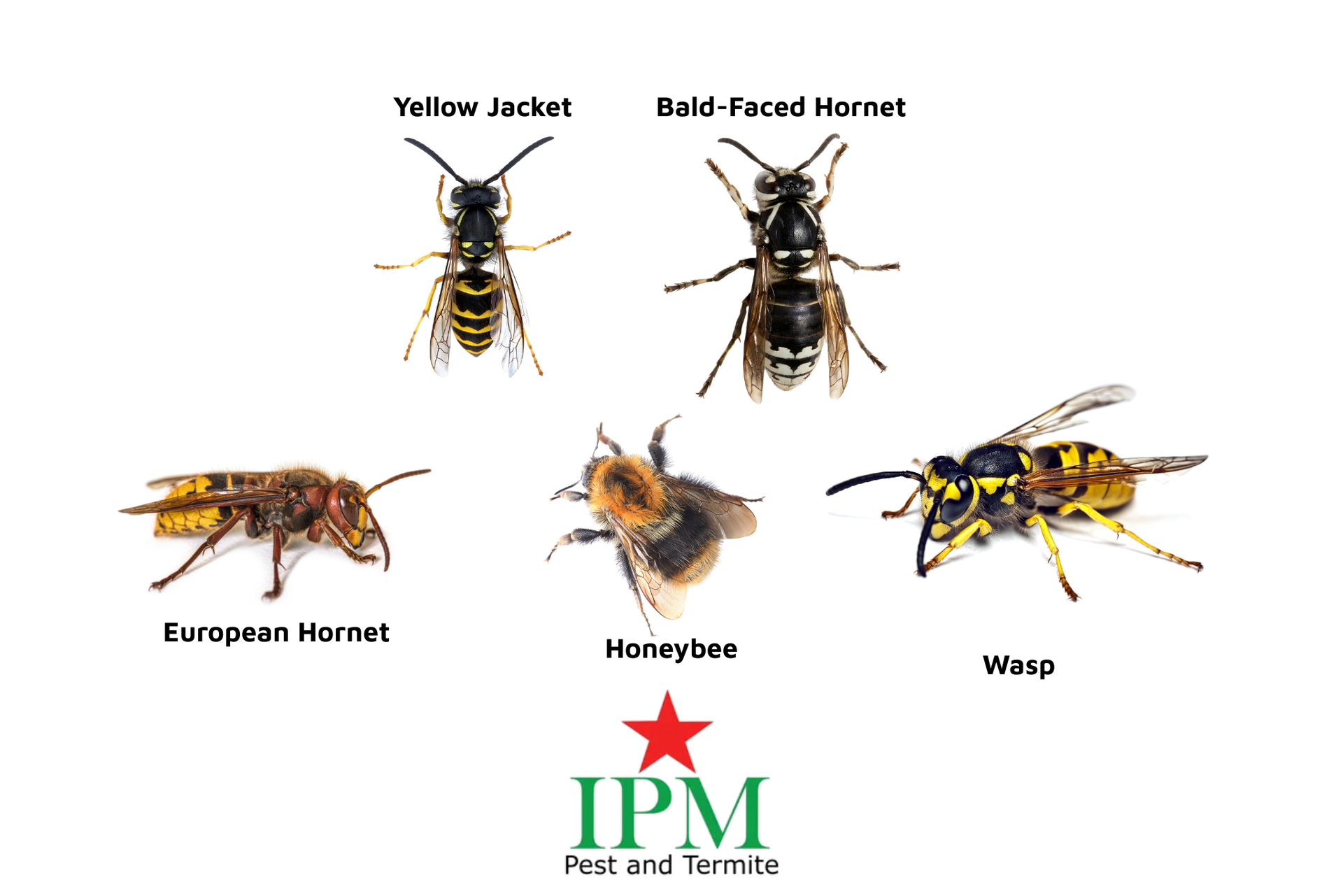
At IPM Pest & Termite, we can identify the problem and develop a quick and easy solution. Here is how to identify the most common of Kentucky’s summer stingers, so you can tell quickly whether you’re looking at a bee vs wasp vs yellow jacket — and know when it’s worth calling a professional.
Quick Comparison: Yellow Jacket vs Bee vs Wasp
| What It Looks Like | Where You’ll Find It | How It Stings | |
|---|---|---|---|
| Yellow Jacket | Short, stocky, smooth; bright yellow and black stripes, with smooth stinger | Underground burrows, wall voids, and above-ground nests | Repeatedly |
| Honeybee | About 1/2″, furry, black and golden-brown; often dusted with pollen | Hives in trees, attics, and wall voids | Once |
| Wasp | About 1″, slender, pinched waist, long dangling legs; brown to reddish brown with orange markings | Umbrella-shaped nests under eaves, decks, and in attics | Repeatedly, but only if threatened |
Signs It’s a Yellow Jacket
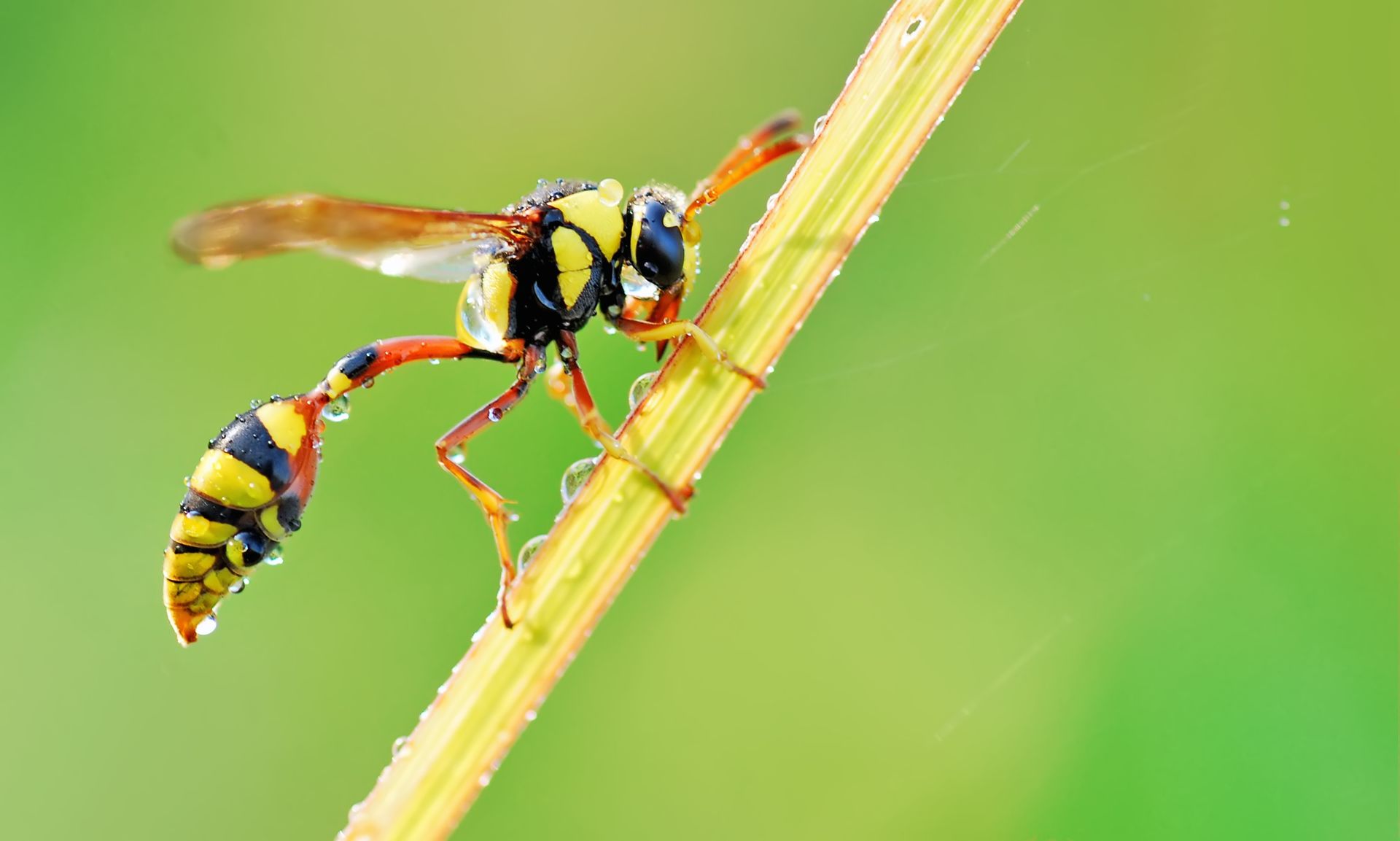
Yellow jackets are an aggressive species of small wasp. While most wasps are unlikely to attack unless their territory is encroached upon, yellow jackets are defensive and aggressive early.
Unlike bees, yellow jackets have smooth stingers that can sting you repeatedly. This is especially a problem in August and September, when they’re aggressively hunting and in constant contact with people doing yardwork or at picnics.
Yellow jackets can live above the ground or under the ground, and if you crush one, they release a chemical signal to the whole colony, telling them to sting. They live in colonies that hold anywhere from 1,000 to 5,000 workers. Homeowners most often find a nest the hard way, by mowing or raking over a ground entrance they never knew was there.
Yellow Jackets: Physical Appearance
Yellow jackets are short and stocky, with smooth bodies and bright yellow and black stripes.
If you see yellow jackets around your home, IPM Pest & Termite can present options to eliminate the problem and keep it away.
Signs It’s a Bee
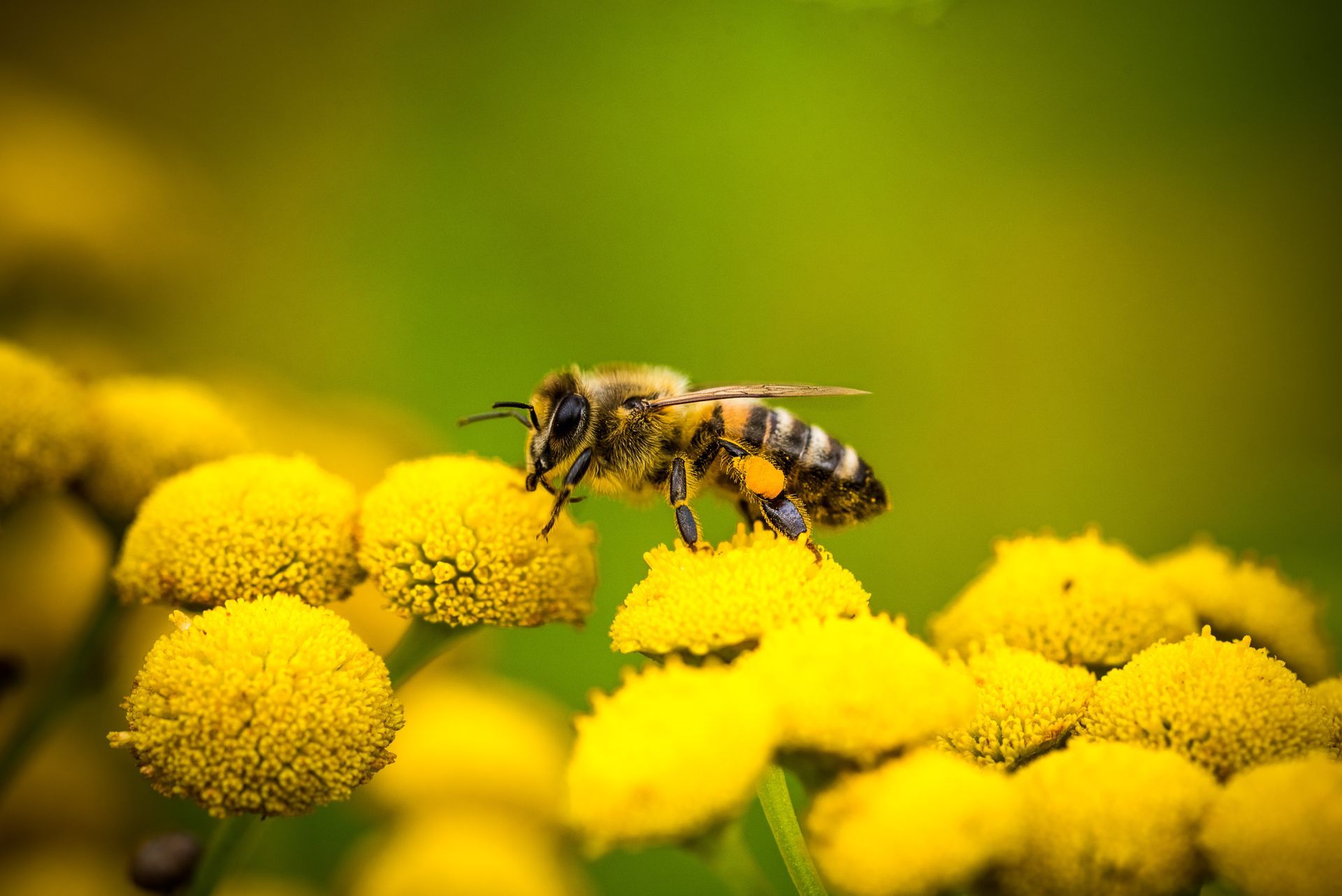
Bees, including honeybees and bumblebees, are extremely beneficial insects and shouldn’t be killed if it can be avoided. They often build hives in trees, attics, or houses, and a hive may need to be removed so it doesn’t cause damage. Bees do not sting unless they are threatened or if they feel trapped, like if they’re caught in hair. Their stingers have barbs on the end that will pull off and kill them, but they can be released if you’re gentle.
If the bee you’re looking at is boring perfectly round holes into the underside of your deck or railing, you’re dealing with a carpenter bee instead, and that one calls for treatment. We cover how to get rid of carpenter bees safely separately.
Honeybees: Physical Appearance
About 1/2″ long, honeybees have black and golden-brown stripes. They’re furry and soft-looking and often covered in pollen.
Signs It’s a Paper Wasp
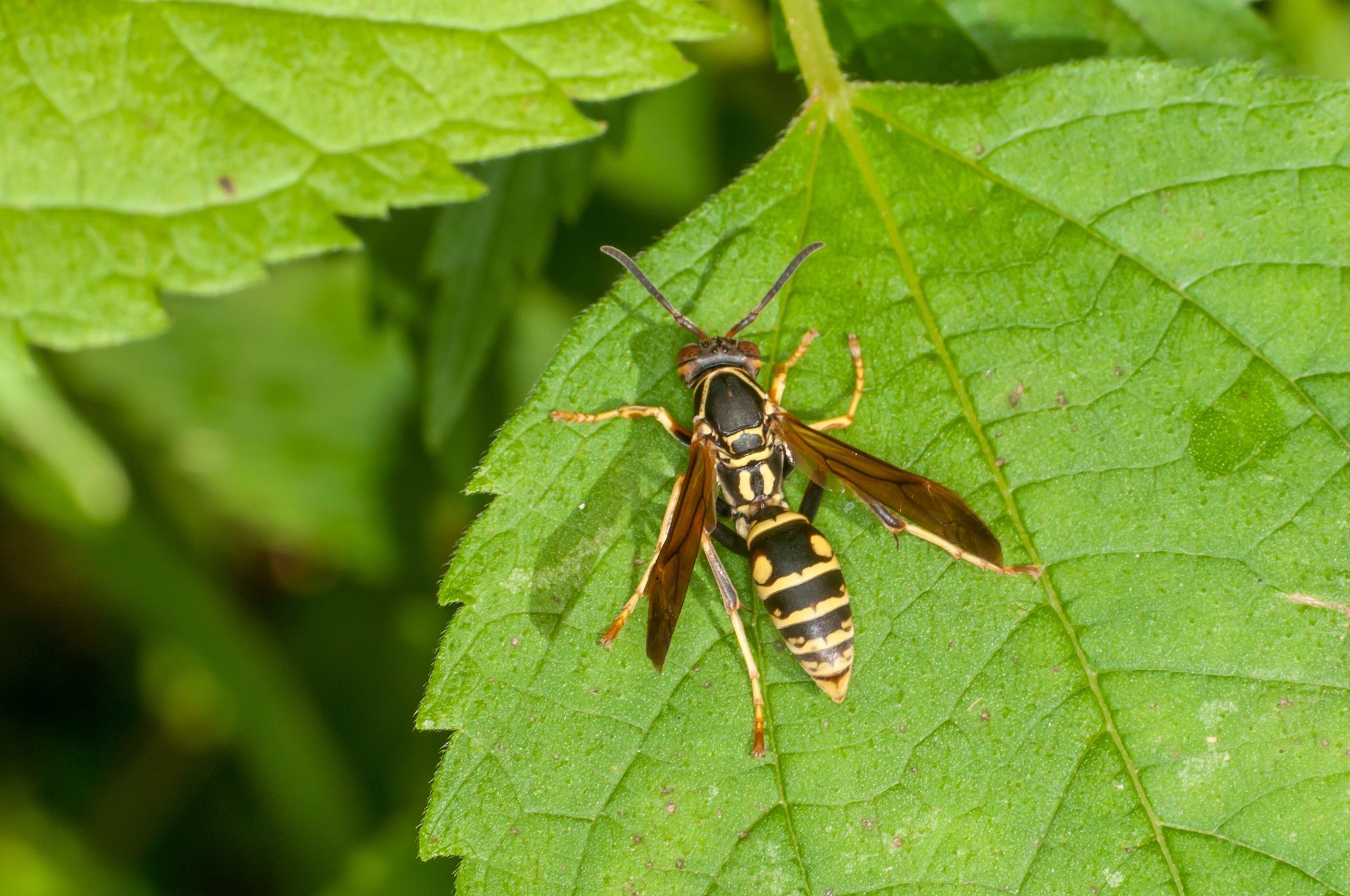
Paper wasps build those big, papery, umbrella-shaped nests people so frequently associate with wasps. You can find these in trees, hanging down from eaves, in attics, near open pipes, and around clotheslines. They typically only attack if they’re being actively threatened. Like yellow jackets, paper wasps use alarm pheromones to send alerts about perceived threats.
Paper Wasps: Physical Appearance
At about 1 inch in length, paper wasps are slender, with long, dangly legs and a pinched waist. They’re usually brown or reddish brown, and have orange markings.
One more Kentucky wasp gets mistaken for a paper wasp regularly: the mud dauber, a solitary wasp that builds tube-shaped nests out of mud rather than paper. Mud daubers are rarely aggressive, but the nests are worth identifying correctly before anyone knocks one down.
Hornets: The Other Summer Stingers
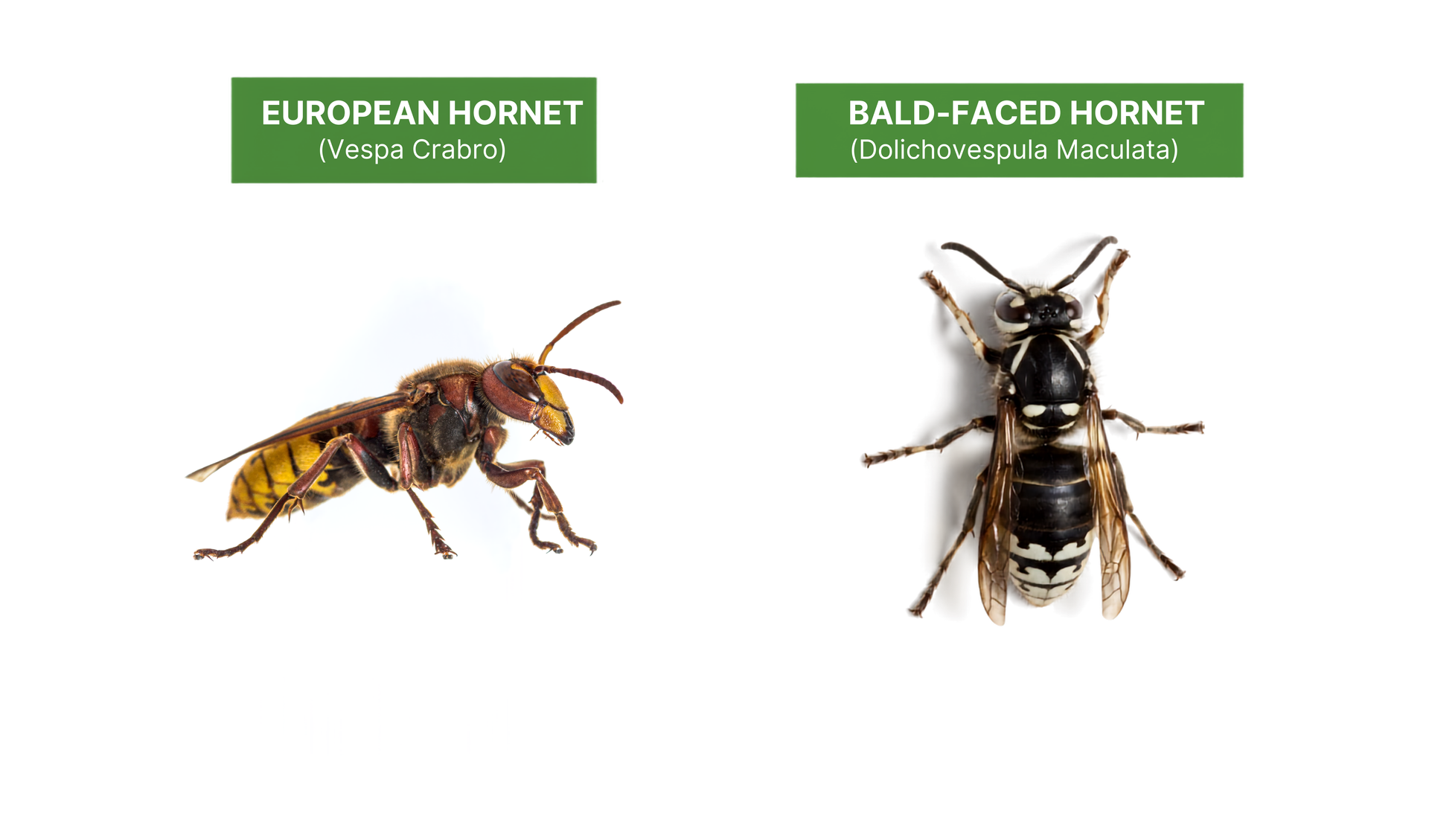
Kentucky yards host several other stinging insects worth knowing as well.
- The European Hornet: Introduced from Europe in the 1840s, hornets are the largest stinging insect most Kentuckians will encounter: workers run about an inch, queens about an inch and a half. Look for a dark red head and thorax, a yellow and brown abdomen, and wings with a distinct brown tint. They nest mainly in tree hollows, though they’ll occasionally use soil or a wall void in a house. In summer and fall, look for signs that the bark off branches and trunks has been chewed to reach the sap underneath. If a nest is somewhere harmless and away from your home, it’s usually best left alone.
- The Bald-Faced Hornet: Despite the name, this one isn’t a hornet at all—it’s more closely related to yellow jackets. It’s easy to identify because it is stark black and white. The giveaway is the nest, a large gray football-shaped paper structure hanging from a branch, a soffit, or a wall. Bald-faced hornets defend that nest, so don’t attempt to knock one down without professional help.
Contact Us to Identify and Exterminate Kentucky’s Summer Stingers
If you see signs of yellow jackets, hornets, bees, or wasps, contact IPM Pest & Termite. We can help you identify the problem and create a solution to eliminate it quickly and effectively. We also have treatments to prevent their return. We’re familiar with the insects that inhabit Kentucky and their habits, so we can help you with prevention. If you’re still deciding whether the problem warrants a call, we’ve written about when to hire a wasp exterminator and how to know if you need a bee exterminator.
To get started with pest removal today, call us at (859) 340-1403 for our Lexington location, (502) 399-4536 for our Louisville location, or complete our contact form. We serve the greater Lousiville and Oldham County, and the greater Lexington, KY area, including Richmond and Winchester, KY.